Showing posts with label cpap. Show all posts
Showing posts with label cpap. Show all posts
Wednesday, April 12, 2017
Obstructive sleep apnea, CPAP therapy, and diabetes
This study involved a large population of veterans diagnosed with obstructive sleep apnea (OSA). The study authors examined CPAP therapy usage and its effect on diabetes. The results showed that metabolic markers of diabetes were reduced in those patients that used the CPAP the most per night. Specifically, usage of at least 6 hours per night. The reduction in diabetes markers was not present in those with less nightly CPAP usage. Also, the risk of developing diabetes was reduced by those that used CPAP at least 6 hours per night. Finally, both of these findings were not influenced by the slight increase in weight observed during the follow up period measured.


Wednesday, March 29, 2017
CPAP may improve PTSD in Veterans with sleep apnea
This article discusses research about post-traumatic stress disorder (PTSD) and obstructive sleep apnea (OSA). There have been research studies linking PTSD and OSA, possibly because of OSA-related sleep disruption. In particular, OSA can be more frequent in dream sleep, resulting in more dream sleep fragmentation. This could cause more nightmares, or at possibly more awareness of nightmares. In this study, the authors sought to determine if CPAP therapy for OSA also reduced PTSD severity in US Veterans.
The results showed a modest reduction in PTSD symptoms in patients with OSA treated with CPAP for 6 months. And the more nights someone used their CPAP, the less severe the PTSD symptoms. There were also improvements in sleep quality, daytime functioning, and quality of life.
Wednesday, November 25, 2015
Sleep apnea and Meniere's Disease
Meniere's Disease involves the ear, and produces symptoms of hearing loss, tinnitus (ringing in the ears), and vertigo (a form of dizziness). Nausea and vomiting often accompany the vertigo. Meniere's Disease is usually treated with medications, but that does not always help. Some research has pointed to an association of poor sleep quality and Meniere's Disease. Obstructive sleep apnea (OSA) can result in poor sleep quality and could worsen Menierie's.
This small study looked at the effect of 6 months of CPAP therapy on Meniere's Disease. All 20 patients had failed medication management of Meniere's Disease. All had OSA diagnosed with a sleep study, and all used CPAP therapy only. They did not restart their Meniere's medications during this study. Results showed that CPAP therapy by itself reduced the impact of the vertigo and the low-frequency hearing loss associated with Meniere's disease.
The reason that treating OSA may help Meniere's is unknown. The study authors speculate that elimination of low oxygen levels when asleep may be the factor that improves the Meniere's. I also wonder if elimination of the snoring helps.
Wednesday, September 30, 2015
CPAP use, obstructive sleep apnea, and cardiac function
Studies have shown that obstructive sleep apnea (OSA) can negatively impact cardiac function, especially if the OSA is severe. And studies have shown that treating severe OSA with CPAP can improve cardiac function. However, studies have not shown clearly that treating milder cases of OSA provides significant cardiac benefit.
This study looked at patients with mild-to-moderate OSA with mild cardiac dysfunction. Patients were minimally symptomatic with regards to OSA as well. Patients were either given CPAP for 6 months or given no CPAP. Compliance with CPAP was determined based on the CPAP download. The results did not show any convincing change in cardiac function or structure after 6 months of CPAP usage. There was no dose response effect with CPAP usage either, meaning that there still was no change in cardiac function in those that used CPAP the longest per night.
The researchers concluded that CPAP use in patients with mild OSA and mild cardiac dysfunction may not be as helpful as traditional cardiac dysfunction treatments like blood pressure medications.
Wednesday, June 10, 2015
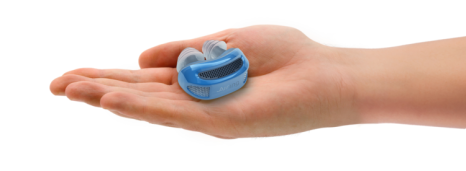
Micro-CPAP
I've been asked by multiple patients in the past few weeks about this tiny CPAP, the Airing. I don't know anything about it other than what is in this article. It looks interesting, but I have many questions about it. If it gets FDA approval, we will learn much more. 
Wednesday, May 27, 2015
CPAP therapy and cognitive performance in elderly patients with severe obstructive sleep apnea
Obstructive sleep apnea (OSA) is more common with age, regardless of weight. OSA in elderly patients can contribute to daytime sleepiness and impair cognitive performance. OSA has even been associated with development of early dementia, called mild cognitive impairment. There is not a lot of data showing the effects of CPAP use on cognitive functioning in elderly patients. But that is just what this study sought to do.
The study population was a subset of a larger study, and participants were at least 65 years old. Participants received extensive neuropsychological testing at the start and end of the study period (6-10 years between the two time points). Participants had a sleep study at the beginning of the study and only those with severe OSA were included. The researchers then divided the participants into those that used CPAP therapy and those that did not. This was a smaller study, with only 126 subjects included, 33 of which used CPAP. Also, note that CPAP use was determined by the patient's self-report. In other words, CPAP use was not determined objectively by checking what the CPAP machine had recorded. So it's possible that CPAP use may have been over-estimated. The researchers also did not separate out CPAP use into the number of hours per night - participants either did or did not report CPAP use. Interestingly, all of the CPAP users reported using CPAP for the minimal 4 hours per night. Finally, participants who used CPAP tended to have more severe OSA, were more overweight, and had more daytime sleepiness. There was no difference in age, gender, or level of education in those that used CPAP versus those that did not.
The results showed that subjects with OSA had a more severe deterioration of cognitive function and memory over time. Also, CPAP therapy helped preserve some cognitive functions like memory, attention, and decision making ability. The authors concluded that long term CPAP use is associated with a protective effect on cognitive performance in elderly patients with severe OSA. They suggest that physicians who treat elderly patients consider screening for and treating OSA to help maintain cognitive performance.
Wednesday, May 20, 2015
CPAP and blood sugar levels in Prediabetes
Prediabetes is a condition in which blood sugar levels are elevated above normal, but not high enough to meet criteria for diabetes. Here is a study that measured blood sugar levels (and other parameters) during two weeks of CPAP use versus an oral placebo in patients diagnosed with obstructive sleep apnea. I only have access to the abstract and an article about the study. In this study, researchers ensured that those randomized to CPAP used it for 8 hours a night for two weeks straight. The results showed that the CPAP users had lower blood sugar levels as the main outcome. A secondary outcome measure showed lower blood pressure levels in the CPAP users when compared to the controls.
Wednesday, April 15, 2015
Sleep apnea and high blood pressure
Another post about obstructive sleep apnea (OSA) and high blood pressure (HTN). This study is a meta-analysis of observational studies and randomized controlled clinical trials. The study authors studied patients with resistant HTN, meaning blood pressure that was not responding to multiple medications. The study participants also had OSA.
I don't have access to full article, only the link above and the abstract. The results suggest that those patients with the highest blood pressures had the greatest reduction in blood pressure after using CPAP therapy. The study authors concluded that untreated OSA may be why some patients' blood pressure just won't come down with multiple medications.
The results from this study are not new, but do provide more evidence of the importance of screening patients with resistant HTN for underlying OSA. In my community, primary care doctors have been doing this for years already. However, this may not be the case in other medical communities around the country.
Wednesday, April 1, 2015
CPAP use after weight-loss surgery
Obstructive sleep apnea (OSA) and obesity are related. Weight loss can improve OSA, sometimes enough to eliminate it altogether. However, if OSA is severe, weight loss alone is often not enough to cure OSA.
Most patients who undergo weight loss surgery have OSA, and most use CPAP prior to weight loss surgery. Unfortunately, most patients discontinue their CPAP use after weight loss surgery. This study assessed long-term CPAP use in 21 patients who had undergone gastric banding. Results showed that body-mass index significantly increased by 6.8 in those patients who did not use their CPAP after weight loss surgery. And BMI dropped by 1.8 in those patients that were adherent to CPAP therapy after weight loss surgery.
Another important point is that OSA persisted in almost all of the patients who underwent the surgery, despite the substantial weight loss (average 121 pounds lost). And, after 7.2 years of follow up, the majority of patients had gained back some weight (22 pounds).
So the data in this study suggest that CPAP adherence for the long term may help with weight loss maintenance. Remember this is a small study though. Other confounding factors could contribute to reasons why some patients chose to keep using CPAP. For instance, some may have continued only because using CPAP made them sleep better or have more energy. And that increased energy could have helped them keep exercising, which may help maintain weight. Or those that kept using CPAP may have adhered better to diet restrictions.
In the end, follow up with the sleep medicine specialist is important after weight loss surgery. In that way, post-operative OSA severity can be assessed after the first year. Then, the patient and sleep medicine physician can discuss the pros and cons of continuing CPAP therapy if necessary.
Wednesday, March 18, 2015
Sleep apnea, motor vehicle accidents, and CPAP therapy
There are recent meta-analyses showing higher risk of motor vehicle accidents (MVA) in those with obstructive sleep apnea (OSA), and a lower risk of MVA with CPAP therapy. However, the conclusions from these studies is somewhat limited due to possibly faulty research designs. In other words, it's still uncertain how much risk OSA imparts and if CPAP really reduces that risk. However, this study, recently in the Sleep Journal, set out to determine just that, using a well designed protocol. It was a retrospective study of almost 1500 drivers in Sweden. The results showed that there was a 2.5 fold increase in risk of MVA in patients with OSA. The risk was highest in older drivers. Also, risk was highest in those with high subjective sleepiness, but the risk did not depend on OSA severity. And the incidence of MVA was reduced by 70% among patients that used their CPAP at least 4 hours per night. Interestingly, risk of MVA was increased by 54% among those that used CPAP less than 4 hours per night.
The authors concluded that because CPAP therapy can improve sleep quality and overnight oxygenation, it could improve alertness and driving performance - leading to less MVA's.
Wednesday, February 11, 2015
Nasal surgery and CPAP
Most of my patients with obstructive sleep apnea (OSA) report they are "mouth breathers" at night. Because of that, they often think they should use a CPAP mask that covers their nose AND mouth...the full face mask. Full face masks often leak excessively, especially for side sleepers. I find that most of the time, my patients do well with a mask that just covers their nose or goes right in their nose (nasal pillows). But I have a small segment of patients who really struggle to breathe just through their nose. Almost all of these patients have daytime nasal stuffiness as well. Often, airflow through their nose is not improved with by-mouth medications or nasal sprays. In these cases, patients can opt to use the full face mask, or consider surgical therapy to improve nasal airflow. If the Ear, Nose and Throat (ENT) physician determines there is significant anatomical obstruction, then surgical therapy may improve nasal airflow enough to allow the patient to utilize an over-the-nose mask, instead of the full face mask.
Here is a study supporting my clinical experience. It's a meta-analysis of current literature. After examining past studies, the authors concluded that nasal surgery to relieve obstruction resulted in an average lowering of CPAP pressure by 2.66 cwp. Regardless of nasal surgery type, CPAP pressures were lower on average 1.9 cwp between preoperative and postoperative periods. The greatest difference was in those patients undergoing combined septoplasty with turbinoplasty. Finally, overall CPAP use increased after nasal surgery, possibly due to overall lowered CPAP pressures. The study did not mention changes in mask styles after surgery, such as from full face mask to nasal mask. This change alone, even without reduction in CPAP pressure may improve CPAP adherence.
Wednesday, January 7, 2015
Flying with your CPAP
I get asked about this regularly by my patients. This article is about traveling with a CPAP. Since using CPAP therapy with all sleep will maximize effectiveness, you should bring your CPAP with you when you travel. Of course, don't forget to bring all of the accessories, especially the power cord. Most CPAP machines these days come with a canvas bag to carry the device. I advise my patients to carry the device on board, not checking it as luggage. This is because the CPAP may be damaged during luggage handling or transportation in the plane, or your luggage may be lost. You will need to show the TSA agent the CPAP equipment. Nowadays, they will be used to it, and you will see many other travelers with their CPAPs. You may also need to bring a letter from your physician or a specialized luggage tag that says the CPAP is a medical device that has been prescribed for you.
Some travelers, especially on overnight flights, will want to use their CPAP's on the plane. You will need to check with the airline to see if their planes have power sources and if you can sit near enough to one to plug in your CPAP. Be sure to ask what kind of power source the plane has, as you may need an adapter. Some of my patients have gotten small travel CPAPs that operate on battery power.
If you use the humidifier chamber, don't try to bring distilled water on the plane. Best to buy it at your destination, if available.
Wednesday, December 24, 2014
Depression and obstructive sleep apnea
Depression is a common disorder that exists along with obstructive sleep apnea (OSA). The exact relationship between the two disorders is not known. OSA may contribute to depression due to sleep loss, sleep disruption, and cognitive effects of intermittent low oxygen levels to the brain. Also, weight gain and sleep disruption from depression could exacerbate OSA. Some, but not all of my patients report that their depression gets better with treatment of OSA.
This study is a meta-analysis of research looking at the effects of CPAP and oral appliances on depressive symptoms (as obtained by depression questionnaires) in adults with OSA. The results showed small improvements in depressive symptoms with OSA treatment. The greatest benefit was seen in those patients with the worse depression scores at baseline.
Wednesday, November 19, 2014
Sleep apnea and sex
Studies have shown that obstructive sleep apnea (OSA) increases risk of erectile dysfunction (ED), and treating OSA with CPAP can improve ED. And some of my patients with untreated OSA are just too tired to engage in sex. Finally, some of my patients are hesitant to start CPAP therapy because they worry it will interfere with their sex life. This is usually in my younger patients and some of it is a misunderstanding about when CPAP is worn. Some think it's supposed to be worn whenever they are in their bed, as opposed to just sleeping.
This article discusses research presented at a recent meeting. Researchers asked participants about their sexual quality of life. The participants all has OSA and were prescribed CPAP therapy. The researchers divided the participants into two groups - those that used the CPAP regularly and those that did not. Results showed no difference in sexual quality of life between the two groups. The conclusion was that CPAP did not interfere with the participants sexual satisfaction.
Wednesday, November 12, 2014
Postoperative outcomes in obstructive sleep apnea
Patients with undiagnosed obstructive sleep apnea (OSA) are thought to be at higher risk after an operation than those who have already been diagnosed and are being treated with CPAP therapy. Current practice guidelines recommend screening for obstructive sleep apnea before an operation, and starting CPAP therapy prior to surgery if feasible. Routine monitoring of patients with OSA is recommended after many types of surgery.
This study looked at historical outcomes after surgery that occurred before the implementation of the current practice guidelines. The study included data on adults and compared them to controls at low risk of having sleep apnea. The control patients were matched for the type of surgery, indication for the surgery, and date of the surgery.
The results showed that the risk of cardiovascular complications, primarily cardiac arrest and shock, was increased in undiagnosed obstructive sleep apnea but not diagnosed obstructive sleep apnea. However the risk of respiratory complications, primarily Acute Respiratory Distress Syndrome (ARDS) and acute respiratory failure was increased in both groups without significant difference in risk between them. Also, the results showed that increasing severity of obstructive sleep apnea, age, comorbid disease, and the type of surgery were also important risk predictors for postoperative complications.
The study was not designed to determine whether reduction in cardiovascular complications in those patients diagnosed with OSA was due to CPAP use as usage of CPAP was not measured immediately after surgery.
Wednesday, September 17, 2014
Brain changes before and after CPAP treatment for obstructive sleep apnea
Some studies have shown changes in the white and gray matter of the brain from untreated obstructive sleep apnea (OSA). The gray matter refers to cell bodies in the brain and is generally on the outer surface. White matter is the connections between the cell bodies and some of the supporting cell types - it's deeper in the brain, meaning below the gray matter.
This study sought to evaluate white matter changes and impact on cognition in patients with OSA, and if the changes were reversible with CPAP therapy. The researchers studied 17 patients with severe OSA and compared them to similar patients that did not have OSA. The treated patients were evaluated at baseline, 3 months, and at 12 months - however, the controls were only evaluated at baseline. CPAP use was monitored objectively with downloads from each unit.
Results showed changes in white matter in the untreated OSA patients. There was only limited improvement with 3 months of CPAP, but there was significant improvement at 12 months of CPAP. This is an exciting study because it suggests that the brain damage inflicted by untreated severe OSA may be reversible with regular, prolonged CPAP treatment.
Wednesday, September 10, 2014
Benefit of CPAP use in older people with obstructive sleep apnea
Here is a study about obstructive sleep apnea (OSA) treatment in elderly people. It was done in the UK over 12 months in those 65 years and older with OSA. Subjects were randomized to get CPAP treatment or no CPAP treatment. Those who did not get CPAP received advice on minimizing daytime sleepiness through sleep habits, napping, caffeine use, and weight loss. The main purpose of the study was to see if CPAP use reduced sleepiness levels and if CPAP is cost-effective.
Results showed that subjective sleepiness was reduced to a greater extent in those that received CPAP treatment. As expected, the reduction in sleepiness levels was greatest for those who started out with the highest sleepiness levels. CPAP use reduced healthcare usage, which offset the cost of the CPAP - the authors concluded that CPAP use is cost effective for older patients.
Other outcomes were measured as well. CPAP use did not improve cognitive function or blood pressure. CPAP did improve total cholesterol levels at 3 months, but not at 21 months. Night time urination, and home and driving accidents were not improved with CPAP use.
What is most interesting to me about this study is that CPAP improved sleepiness despite a low amount of CPAP use by the participants. Good CPAP usage is generally defined as using CPAP at least 4 hours per night on 7 out of 10 nights. In this study, usage was about 2 hours per night on average.
Wednesday, August 6, 2014
Sleep apnea surgery
Continuous positive airway pressure (CPAP) remains the most effective treatment for obstructive sleep apnea (OSA). As many of you may know, CPAP is not well tolerated and usage of CPAP remains a significant problem. Some patients decide to pursue upper airway surgery for their OSA. However, surgery tends to be the least effective option for adults. In children, surgery is often the treatment of choice - it works quite well in fact. In adults, the more common procedure is called a uvulopalatopharyngoplasty or UP3. This involves removing the tonsils, the uvula, and part of the soft palate. A newer procedure called coblation channeling of the tongue or CCT involves surgically reducing the volume of the tongue. This article discusses research out of Australia showing a combination of UP3 with CCT may be more effective than either procedure alone. This may provide better results to patients who suffer from OSA but can not tolerate CPAP.
Wednesday, May 28, 2014
CPAP improves blood sugar control
I've blogged before about how patients with obstructive sleep apnea (OSA) are at increased risk of developing diabetes. I've also written about how treating OSA can improve blood sugar control in diabetics. Here is another study that demonstrates long term use of CPAP (5 years) is associated with better control of blood sugar in diabetics. The study also showed that long term use of CPAP was associated with lower blood pressure and improved quality of life. The study authors concluded that CPAP use is a cost-effective treatment option for OSA.
Wednesday, May 14, 2014
CPAP use and high blood pressure
Studies have shown that obstructive sleep apnea (OSA) is linked to high blood pressure (HTN). There was a paper in 2012 that was a meta-analysis showing that CPAP significantly reduced both systolic and diastolic blood pressure (DBP). When the researchers looked closer at the data, they discovered that the reduction in DBP occurred more often when the baseline DBP was high, as well as when the patient was excessively sleepy at baseline. The results did not show that reduction in blood pressure was associated with the OSA severity.
In this study, the researchers went back over the original data to further explore the relationship between blood pressure improvement and CPAP therapy. The results showed that the sole predictor of reduction in blood pressure was the presence of uncontrolled HTN at baseline. Again, OSA severity was not related to the reduction in blood pressure seen with CPAP therapy. Also, excessive sleepiness was not a significant predictor in CPAP reducing blood pressure, in contrast to the prior study.
The researchers concluded that patients with OSA who have uncontrolled HTN would have the largest benefit in their blood pressure with CPAP therapy, despite how severe the OSA or how sleepy the person may or may not be.
Subscribe to:
Posts (Atom)